
The Swimmer
Feature film, production/post-production 2026/27
After a perilous journey from Pakistan, a young asylum seeker ends up in Northern Europe. He is Hazara, originally from Afghanistan, raised in Quetta, with a piece of shrapnel embedded in his leg from a bombing that killed his best friend. We can call him Arash. He wants to be a photographer. As an aspiring competitive swimmer, he dreams of representing Sweden in the Olympics. During his first summer in Sweden, at a makeshift camp for young asylum seekers housed in a repurposed hotel, Arash meets artist and nonfiction filmmaker Sara Jordenö. He asks her to tell his story. She says yes.
For Arash, his lived experience becomes a form of currency. Moving through asylum, migration, and border control, his life is translated into legal categories, administrative language, and judgment. Each telling of his story carries enormous consequences for his future. Eventually, the border no longer operates only at the edge of a territory. It has become something he has to carry in his body, something he cannot escape.
One day, somewhere in Europe, he disappears.
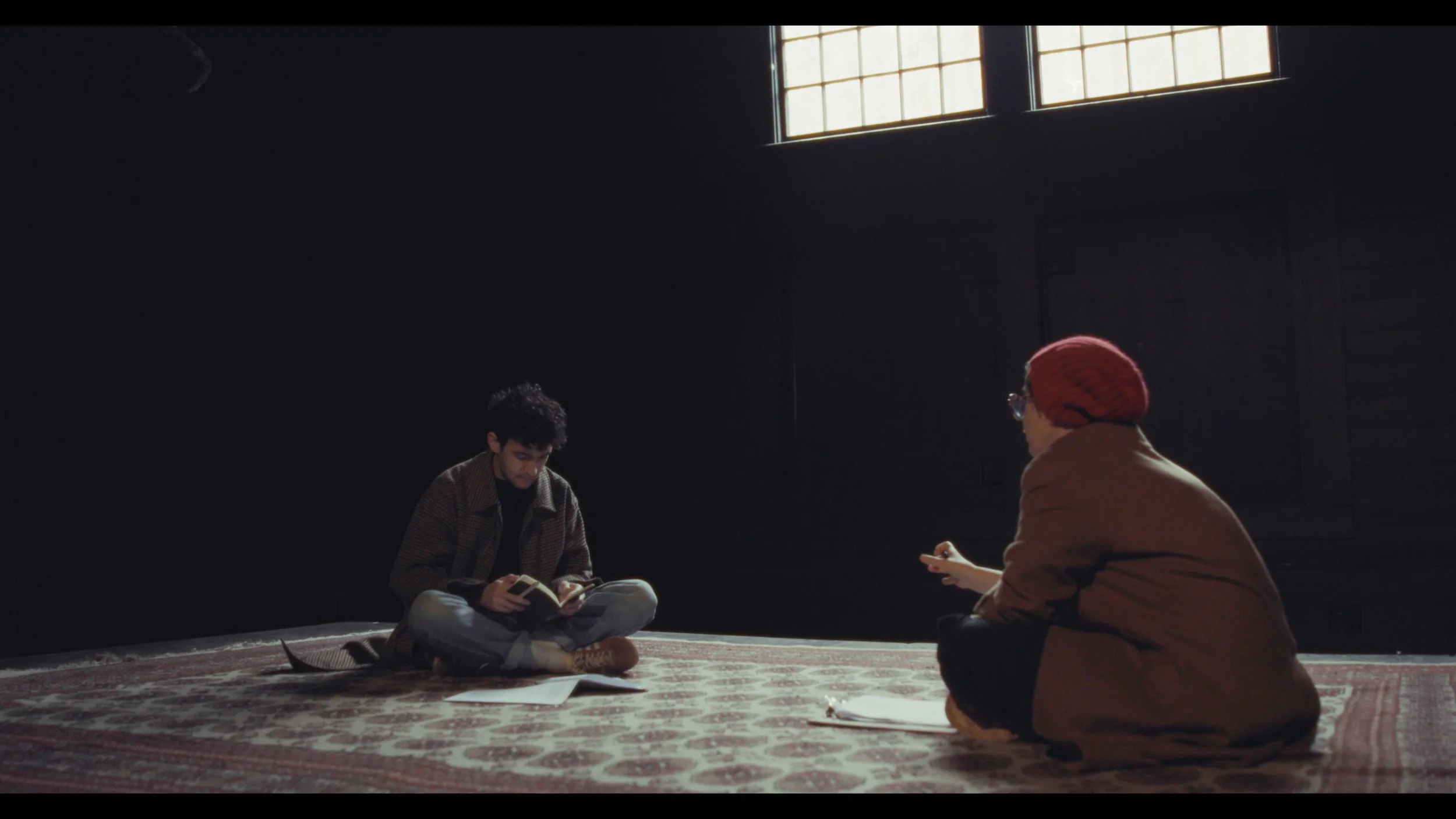
In The Swimmer, the filmmaker enters the frame and works with actor Ahmad Maher to create a useful fiction. Translating years of recordings into embodied performance, the actor becomes the filmmaker’s conversation partner in an “as if” space, where memory, testimony, and negotiation remain active after the film’s central subject is no longer there. The interrupted exchange is allowed to continue. But gradually, the fiction begins to speak back. It is no longer obedient. It begins to challenge the filmmaker.
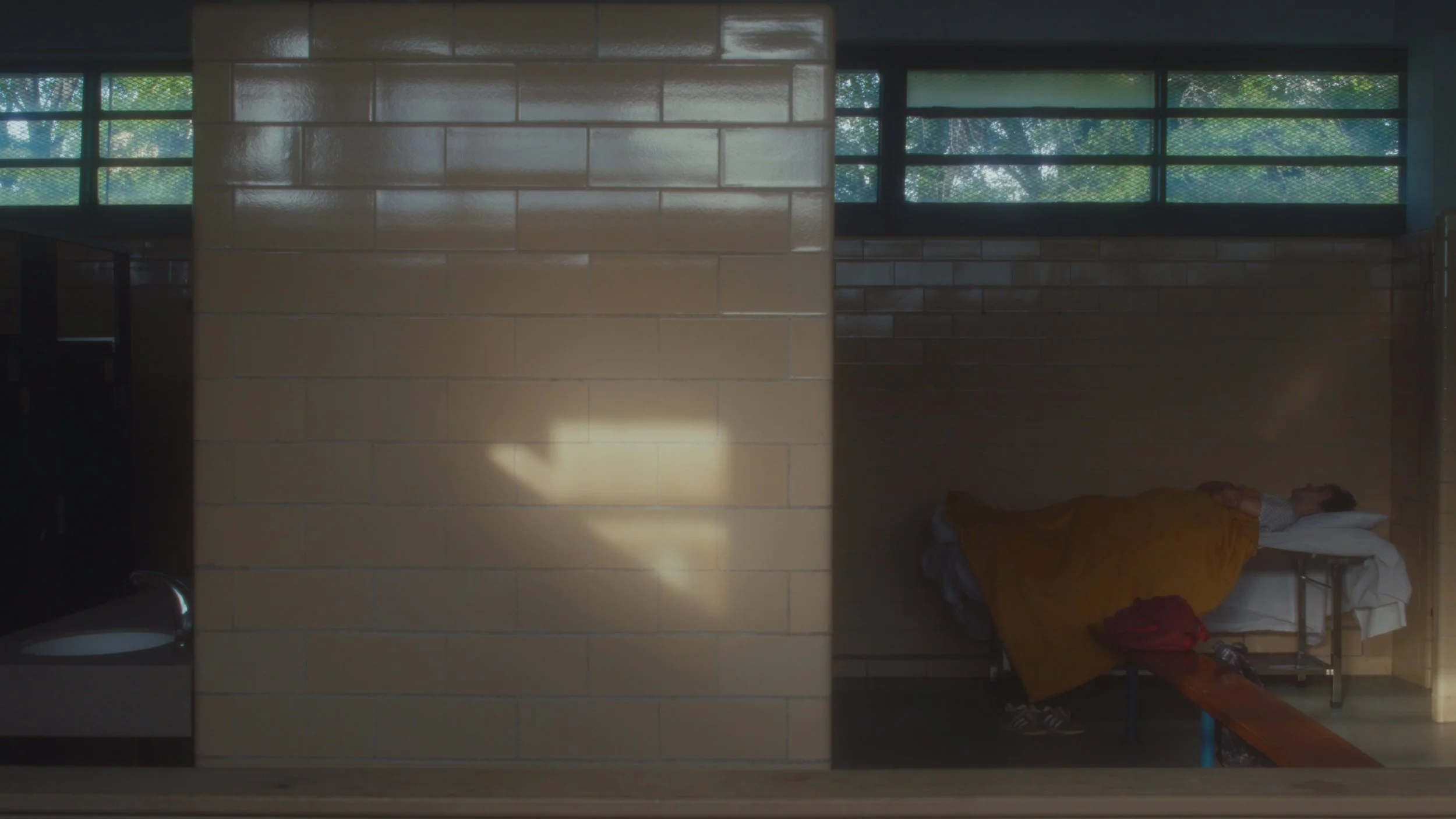
The Swimmer is the second feature film from Sara Jordenö (KIKI, Diamond People, Civil Society). Working with cinematographers Nina Zehri and Maja Dennhag, The Swimmer develops a surreal and tactile cinema of dislocation: a visual language of temporary rooms and landscapes, shaped by the logic of memory and hallucination. The film traces the contours of what nonfiction can be when the person it is addressing is absent, and when reconstruction, embodiment, and imagination become methods of accountability.
Jordenö began the film in 2016, during the European refugee crisis, when tens of thousands of young Afghans arrived in Northern Europe. Many were unaccompanied Hazara teenagers who had grown up in Iran or Pakistan. Ten years later, Europe has yet to reckon with what happened to these young people. Many remain in Europe, caught in what migrants call “the football match”: moved from one temporary status, camp, country, or appeal to the next.
In Sweden, new immigration laws taking effect in 2026 deepen that insecurity. The so-called “informer law” requires some public employees to report people suspected of living in the country without legal status. A new “good behaviour” law allows residence permits to be revoked for broad reasons, including non-criminal issues such as unpaid debts or undeclared work. The law can be applied retroactively.
These measures are part of what legal scholar Ayelet Shachar calls the “shifting border”: the border no longer exists only at the edge of a country. It follows migrants into everyday life, even after they have been allowed to remain. By denying people stable status and access to legal work, asylum systems can criminalize the acts required to survive—and then use those same acts as grounds for exclusion or deportation.
The Swimmer asks what it means to live without certainty, and why these lives remain an unfinished political and ethical question.
Impermanent Passage
Nonfiction book, in progress 2026/27
Impermanent Passage uses the form of the lyric essay, moving between theory and poetry, literature and film writing. The book brings together memoir, testimony, research, and reflection. It moves alongside the film as another form of listening and performing a precarious record.
The Swimmer and Impermanent Passage are parallel works: a feature film and a creative nonfiction book, each using the distinct capacities of film and text to approach the same set of questions.
The Swimmer and Impermanent Passage begin where a promise could not be kept. Together, the film and book explore useful fiction: the act of proceeding as if the conversation might continue, as if performance could open a space for testimony and memory, as if cinema and writing could still remain in relation to the person who first asked for the work to be made.
Make a film about me you said
and I said
Yes
For seven years, we stayed in each other’s orbit
And then one day, you stopped answering my messages
You disappeared
Tell me, how do I start?
I’m here now, even though you are not
It could be as if you were here too
As if we could have a conversation
Tell me two things:
1. How do I start?
2. How do you end?
(From Impermanent Passage)